MICHAEL J. CLARK
FINE ART PORTFOLIO
ABOUT
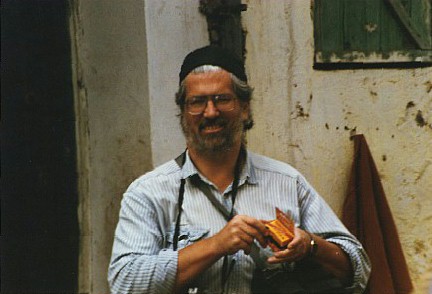
THE ARTIST
He began work on a major
novel, Conversations On a Dying Age, in the summer of 1977; and
finally completed the work in 1984. The novel follows the protagonist, Jacob Heimkreiter,
in a leisurely stroll into his own death. He has cancer. He spends his days
walking through the park, communing with a best friend with whom he plays
chess, philosophizes, and confesses his fears and sins--his best friend, in
truth, being the reader. Heimkreiter eventually dies and journeys into the
formless world of anti-Time, passing through hell, scaling his fears into a
land of light, gaining a new set of commandments from the gods on the high
mountain where the law-givers reside; he then returns, re-born back into Time,
a new man, returning to the body after a long night of the soul. The
"dying age" in the title refers to Jacob's own death, the death of
his society (economic and moral recession of the late 1970s) and the death of a
millennial age.
He completed a short
novel, In His Tar and Feathery Dignity, in 1986. This novel
describes an historic incident of persecution of a group of Jehovah's Witnesses
in Rawlins, Wyoming, in the mid-1930's.
He completed a long work
of prosepoems in 1989, Instrumentation in the
Wheelhouse. The prosepoem is a synthesis of
prose writing and poetry, seeking to combine the story-telling capacity of the
novel and the rich language and imagery of the poem. Instrumentation
is a picture, in an abstract structure, of one life, from pre-birth in the land
of the fathers (ghosts of his ancestors), through childhood, adolescence,
adulthood, and old age, into approximation again with the ancestors, of whom he
is now is becoming one.
In 1990, he completed
another short novel, The Ballad of a Stockbroker, the story of a
mystical Wyomingite who appeared in Eugene, Oregon in the mid-1970s, armed with
a computerized trading system for stocks and options. He is hired on a trial
basis by a local money management firm. His influence slowly wreaks havoc on
the conservative, traditional firm.
He completed a collection
of short-stories in 1995 entitled The Death of A
Liberal. These stories examine the legacy of the liberalism of the
1960's from the perspective of the 1990's--a middle-aged eye being cast back on
the shadows of the idealisms of youth.
In 1996, he
completed a screenplay, Two Friends, based on a Vietnamese
folktale.
Clark is currently
working on a major novel, Cross Examination, which examines
religion, science, philosophy, language, evolution, the
clash of civilizations, fame, madness, obsession, and history. He is seeking a
publisher and would appreciate any help that could be given by anyone in this
labor.
Click here to access M
Clark’s writing page:
http://www.hoalantrangallery.com/MJCwriting.htm
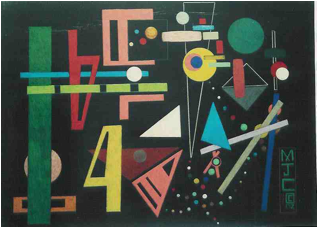
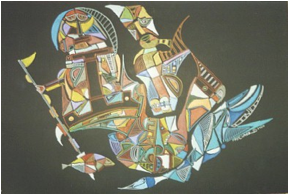
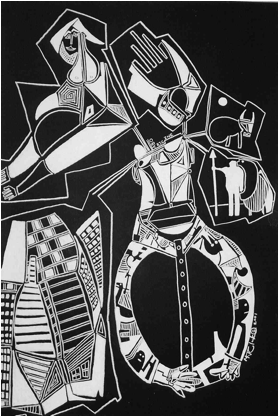
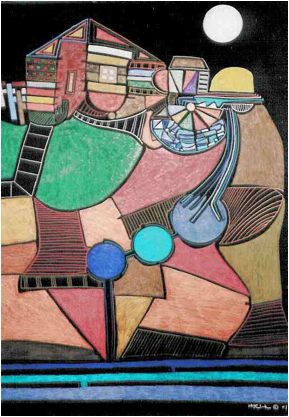
FINE ARTS: Clark has been drawing and painting since the early
1980's. His fine art, like his writings, are concerned
with ideas. He considers his fine art to be expressionistic pictographs of the
psyche.
Clark's work has been on regular exhibit at the Gallery at Salishan on the Oregon Coast, Due Fine Arts Gallery in
Eugene, Oregon, and Silk Road Gallery in Portland, Oregon.
ARTIST'S
STATEMENT
Writing taught me at
a relatively early age that the process of artistic creation – at least
in my experience -- relies primarily on the ability to hear (for the writer)
and the ability to see (for the visual artist). The writer listens to the voice inside
himself, which voice is the real creator, he who whispers words out to the
surface, words which the writer attempts to transcribe as accurately as
possible. The writer is actually a
scribe of the divine force living inside of himself.
My writing process is
to begin largely ignorant of where I am going, to use primal energy, which is
the basis of all origins, to scatter paint (words) on a surface – and
then, later, to look back at the words that came out in the primal flow to see
where the work wants to go. My
approach to painting has been very similar. I will scatter paint or ink on the
surface of a board, paper or canvas, and then look at the chaos I have generated
in that moment of primal chaotic energy (a small bang in all likelihood) to try
to see the form that wants to emerge.
Again, the looker finding the form is not my hand but the angel on the
inside looking out.
Creation, for me,
always begins in the chaos of not-knowing, in the
chaos of confusion and dissonance.
Then the mind – the force of light inside – creates order
out of the discord. In my mind, the
first flash of chaos is NOT art, even though much of the modern art movement
seems to believe it is. In my mind,
art is the conscious organization of chaos into a form which
has BOTH meaning and aesthetic beauty.
Art that cares not for beauty does not appeal to me. Art that has beauty but no meaning is
also dead to me, an incomplete fascination with the dead object. A ‘whole’ art must combine day and
night, ideas and technique, substance and shadow, heaven and hell. It must explore both the inside and the
outside of an idea.
Artists who have
influenced my work, to name a few: Hundertvasser, Chemiakin, Kandinsky, Picasso, Rauschenberg. Artists I admire a great deal:
Modigliani, Andrew Wyeth, Escher, Winslow Homer, and, of course, the medieval
Germans.
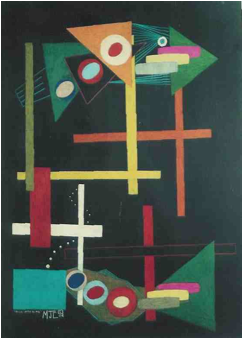
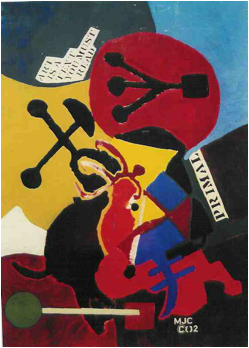
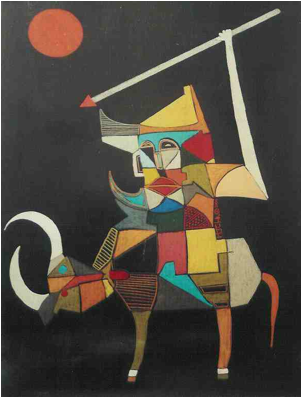
NIGHT
PAINTINGS
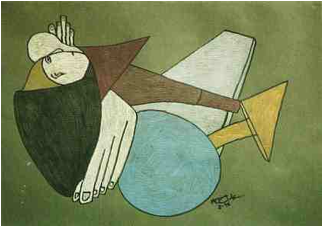
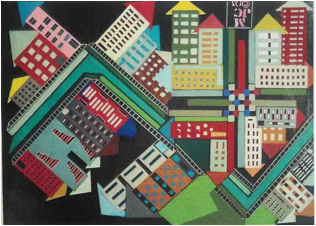
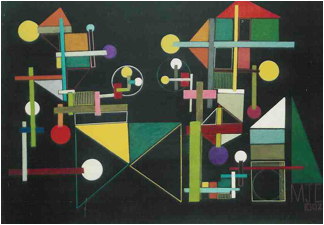
1. “Saying Goodbye” – Mixed Media on
Paper – Image Size: 29 ½ x 21 1/2” - © 1996.
2. “Town Square #1” - Mixed Media on Paper
– Image Size: 29 ½ x 21 1/2” - © 2006.
3. “Duplex” - Mixed Media on Paper –
Image Size: 29 ½ x 21 1/2” - © 2006.
4. “Evolution #2” -- Mixed Media on Paper
– Image Size: 29 ½ x 21 1/2” - © 2006.
5. “The Jazz Singer (Art Is A Text You Must
Read” – Acrylic/Ink on Paper – Image Size: 29 ½ x 21 1/2” -
© 2007.
6. “Hunter and Hunted” -- Mixed Media on
Paper – Image Size: 29 ½ x 21 1/2” - © 2006.
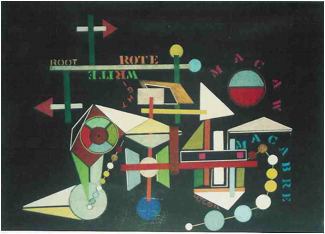
7. “Roots” -- Mixed Media on Paper –
Image Size: 29 ½ x 21 1/2” - © 2005.
8. “The Origins of Numbers and Letters” -- Mixed
Media on Paper – Image Size: 29 ½ x 21 1/2” - © 2005.
9. “First Family” -- Mixed Media on Paper
– Image Size: 29 ½ x 21 1/2” - © 2003.
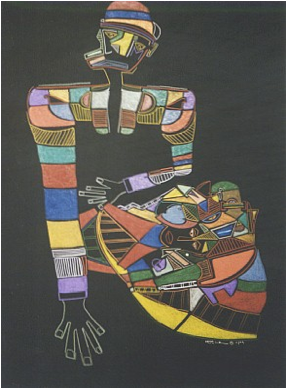
10. “Civilization” -- Mixed Media on Paper
– Image Size: 29 ½ x 21 1/2” - © 2007.
11. “Ecology” -- Mixed Media on Paper
– Image Size: 29 ½ x 21 1/2” - © 2005.
12. “Old Man’s Life Story” -- Mixed Media on
Paper – Image Size: 29 ½ x 21 1/2” - © 2006.
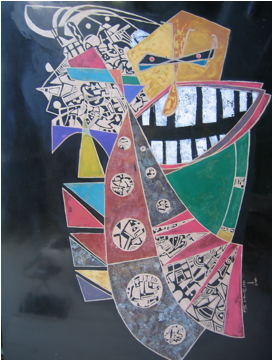
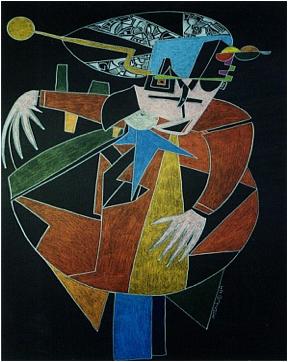
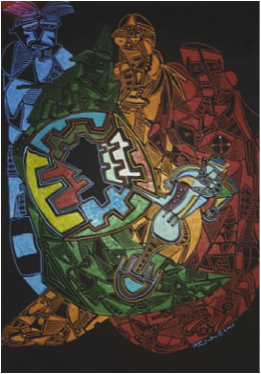
13. “Shadow Puppet” -- Mixed Media on Paper
– Image Size: 29 ½ x 21 1/2” - © 2003.
14. “Father and Son” -- Mixed Media on Paper
– Image Size: 29 ½ x 21 1/2” - © 2003.
15. "Four Horsemen of the
Apocalypse" -- Mixed Media on Paper -- Image Size: 29 1/2 x 21 1/2" ©
2006.
DAY
PAINTINGS
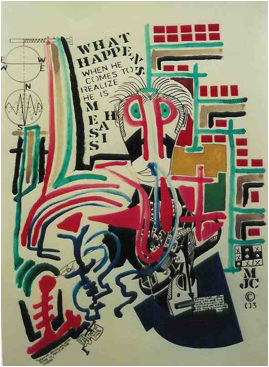
16. “New Paradigm (What Happens When He
Comes To Realize He Is The Messiah)” -- Mixed Media on Paper – Image
Size: 21 1/2 x 29 1/2” - © 2005.
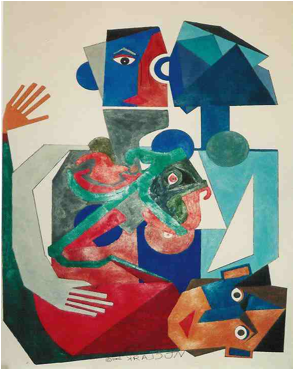
17. “Eve Issuing From Adam’s Rib” -- Acrylic
on Paper – Image Size: 21 ½ x 29 1/2” - © 2007.
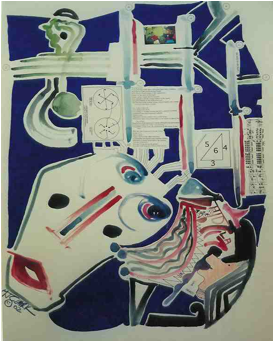
18. “Artz Buch” -- Mixed Media on Paper – Image Size: 21
½ x 29 1/2” - © 2004.
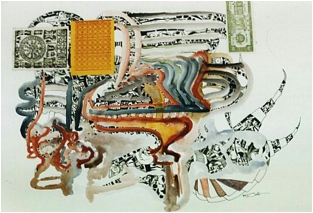
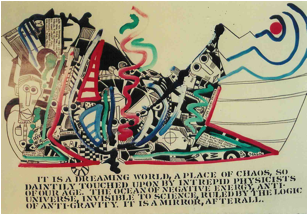
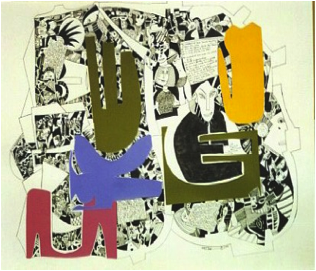
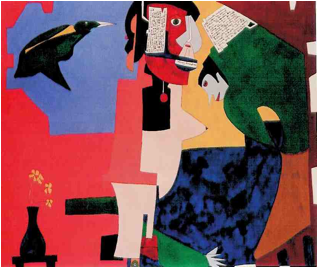
19. “Hell Money” -- Mixed Media on Paper
– Image Size: 29 ½ x 21 1/2” - © 1995.
20. “Black Sleeper/White Sleeper” -- Mixed
Media on Paper – Image Size: 29 ½ x 21 1/2” - © 2006.
21.
"Democracy" -- Mixed
Media on Paper – Image Size: 29 ½ x 21 1/2” - © 1998.
22. “Marital Strife” – Acrylic/Mixed
Media on Paper – Image Size: 29 ½ x 21 1/2” - © 2006.
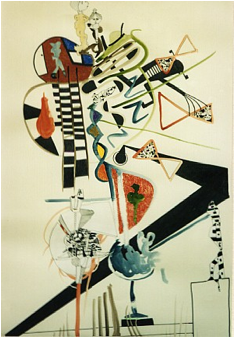
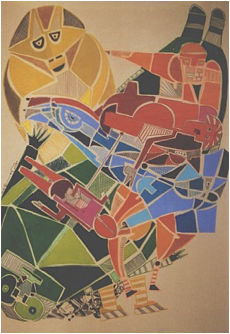
23. “The Diamond Thief” -- Mixed Media on
Paper – Image Size: 34 x 21 1/2” - © 1997.
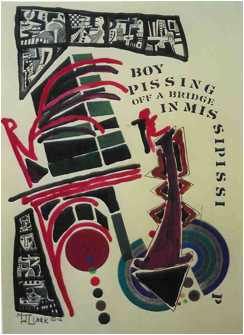
24. “Boy Pissing Off a Bridge in
Mississippi” -- Mixed Media on Paper – Image Size: 29 ½ x 21 1/2”
- © 2003.
25. “Evolution” -- Mixed Media on Paper
– Image Size: 29 ½ x 21 1/2” - © 2000.
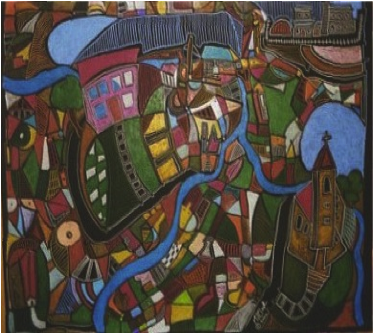
26. "My Hometown-- Mixed Media on Paper
– Image Size: 29 ½ x 21 1/2” - © 2000.
LACQUER
PAINTINGS
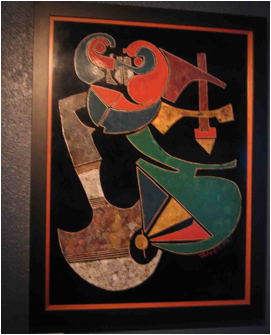
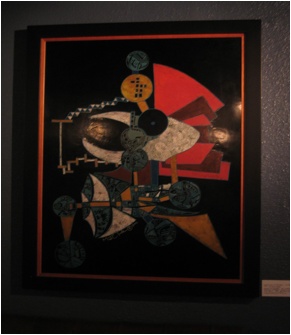
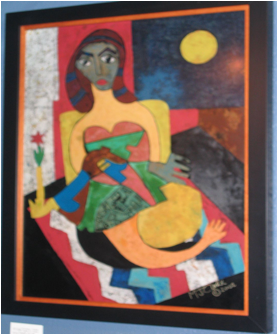
27. “Ahab” – Lacquer Paint on Board
– Image Size: 21 x 29” - © 2002.
28. “Rooster” – Lacquer Paint on Board
– Image Size: 21 x 29” - © 2002.
29. “Home Alone” – Lacquer Paint on
Board – Image Size: 21 x 29” - © 2002.
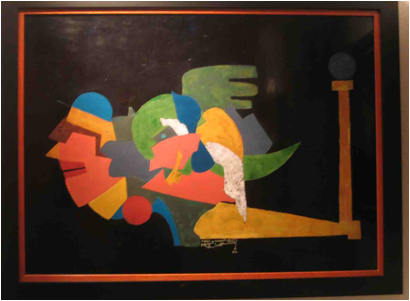
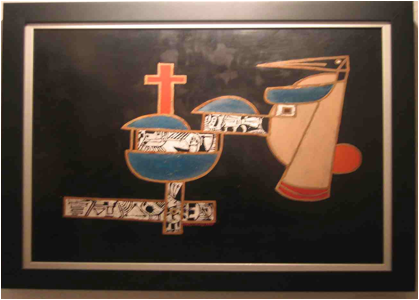
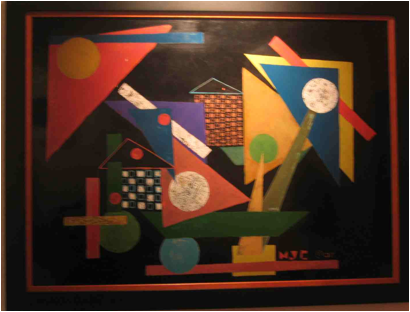
30. “The Guardian” – Lacquer Paint on
Board – Image Size: 29 x 21” - © 2002.
31. “Dusk” – Lacquer Paint on Board
– Image Size: 29 x 21” - © 1999.
32. “Neighborhood” – Lacquer Paint on Board
– Image Size: 29 x 21” - © 2002.
Michael
Clark can be contacted at:
To return to the home
page, please click the link below:
Home Page – Hoa-Lan
Tran / Michael J. Clark Portfolios:
http://www.hoalantrangallery.com/HLT1.htm